
Should I Paint or Stain My T&G Ceiling?
If you’re deciding whether to paint or stain a T&G ceiling, the right choice depends on the wood species, the room lighting, the board condition, and the finish you want to live with. Paint and stain both work, but they solve different problems. The wrong choice usually shows up after the room is finished and the light starts catching every shortcut.
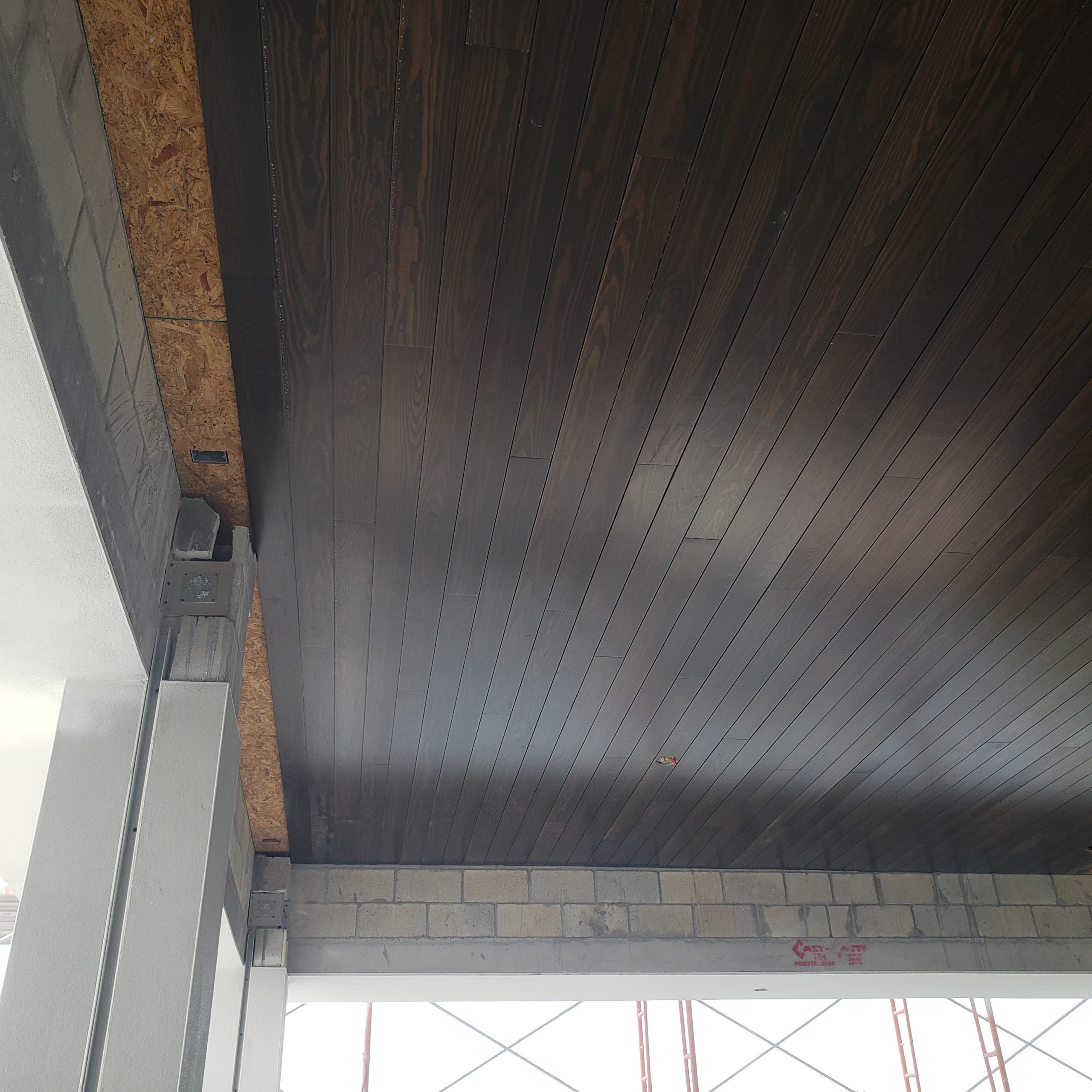
Paint and stain do two different jobs
People ask this question like it’s only about color. It isn’t. Paint and stain tell the room two different stories. Paint makes the ceiling act more like a surface. Stain makes it act more like wood. Neither one is automatically better. The right answer depends on what you want to see, how perfect the boards are, and how much maintenance you’re willing to live with.
That choice also affects how honest the ceiling has to be. Stain shows grain, variation, and prep marks. Paint hides some character but also turns every lap mark, bad bead, and lumpy patch into a shape the light can catch.
Prep decides more than the label on the can
The finish conversation usually starts too late. The real decision starts at prep. If the boards have mixed color, torn grain, mill marks, or uneven sanding, stain will show every bit of it. If the joints are inconsistent and the trim details are messy, paint may hide some wood variation but it won’t rescue poor carpentry.
This is the part homeowners hate hearing because it means the answer is work, not product. I’ve seen people blame a stain color for what was really a prep failure from the sanding stage.
Rule of Thumb: Don’t pick paint because you think it’ll hide bad prep, and don’t pick stain because the sample board looked fancy in one light. Pick the finish your ceiling can actually carry. Overhead shortcuts stay visible a long time.
Need the full tongue-and-groove install sequence?
I put the planning, setup, layout, fastening, trim, mistakes, and checklists together in one PDF handbook so you are not piecing the job together one tip at a time.
When paint wins
Paint is usually the better move when you want the room brighter, the board character quieter, or the overall look more controlled. It works well in spaces where the ceiling should support the room instead of dominate it. It also gives you more flexibility if the material mix is uneven and you don’t want every board announcing itself.
Paint can also make sense when the trim package is already painted and the ceiling needs to tie into that language. But overhead paint work has to stay clean. Thick caulk lines, roller junk in grooves, and uneven cut-in work look cheap fast.
DeWalt DWE6423 random orbital sander
A controllable sander matters because ceilings show swirl marks and scratch patterns once the finish hits them. Bad prep is still visible even under good product.
Newborn 250 caulk gun
Use a caulk gun only where the finish system and trim detail truly call for it. On the wrong ceiling, caulk telegraphs and looks fake once light washes across it.
Werner fiberglass step ladder
A step ladder is fine for short punch work and edge detail, but it should support clean hand pressure, not reach-and-pray finishing.
When stain wins
Stain wins when the wood is worth showing and the room benefits from warmth. Good grain, good board sorting, and a ceiling that deserves visual weight all push the answer toward stain. A stained ceiling can make a room feel grounded in a way paint usually can’t.
But stain is less forgiving. Your sanding pattern has to be consistent. Your wipe-off has to be even. Your end matches matter. If the install is average, stain will report it honestly.
How I usually make the call
If the boards are attractive, the room can carry a stronger ceiling, and the homeowner actually likes seeing wood variation, I lean stain. If the ceiling needs to stay lighter, the material is mixed, or the design is cleaner and more painted overall, I lean paint.
One thing I don’t do is pretend there’s a middle answer that fixes weak prep. Whether it’s paint or stain, the finish only looks expensive when the ceiling was handled right before the can got opened.
Platform/Scaffold
A platform scaffold makes overhead sanding, wiping, and finishing more even because you can keep your body square to the work instead of stretching from rung to rung.
Yellow Jacket extension cord
A reliable extension cord keeps lights and corded prep tools from turning the floor into a mess. Bad cord management is a trip hazard when you’re carrying stain or paint overhead.
Maintenance and long-term reality
Paint is often easier for touch-up logic, but it can show cracks and movement at joints in a way homeowners notice quickly. Stain ages differently. It may mellow beautifully, but it also asks you to accept the wood as wood, including natural shifts in tone and the fact that a repair never disappears perfectly.
Think about the room two years from now, not only the sample board today. Ceiling work is miserable to redo overhead, so the finish choice needs to be honest on day one.
Choose the Finish the Ceiling Can Actually Carry
For the tool side of the job, read Essential Tools for T&G Ceiling Installation. For the material side, read Eco-Friendly Tongue-and-Groove Ceiling Materials.
That’s it for today, folks. Hope this helps you with your projects. Enjoy the day. I’ll see you on the next one.