
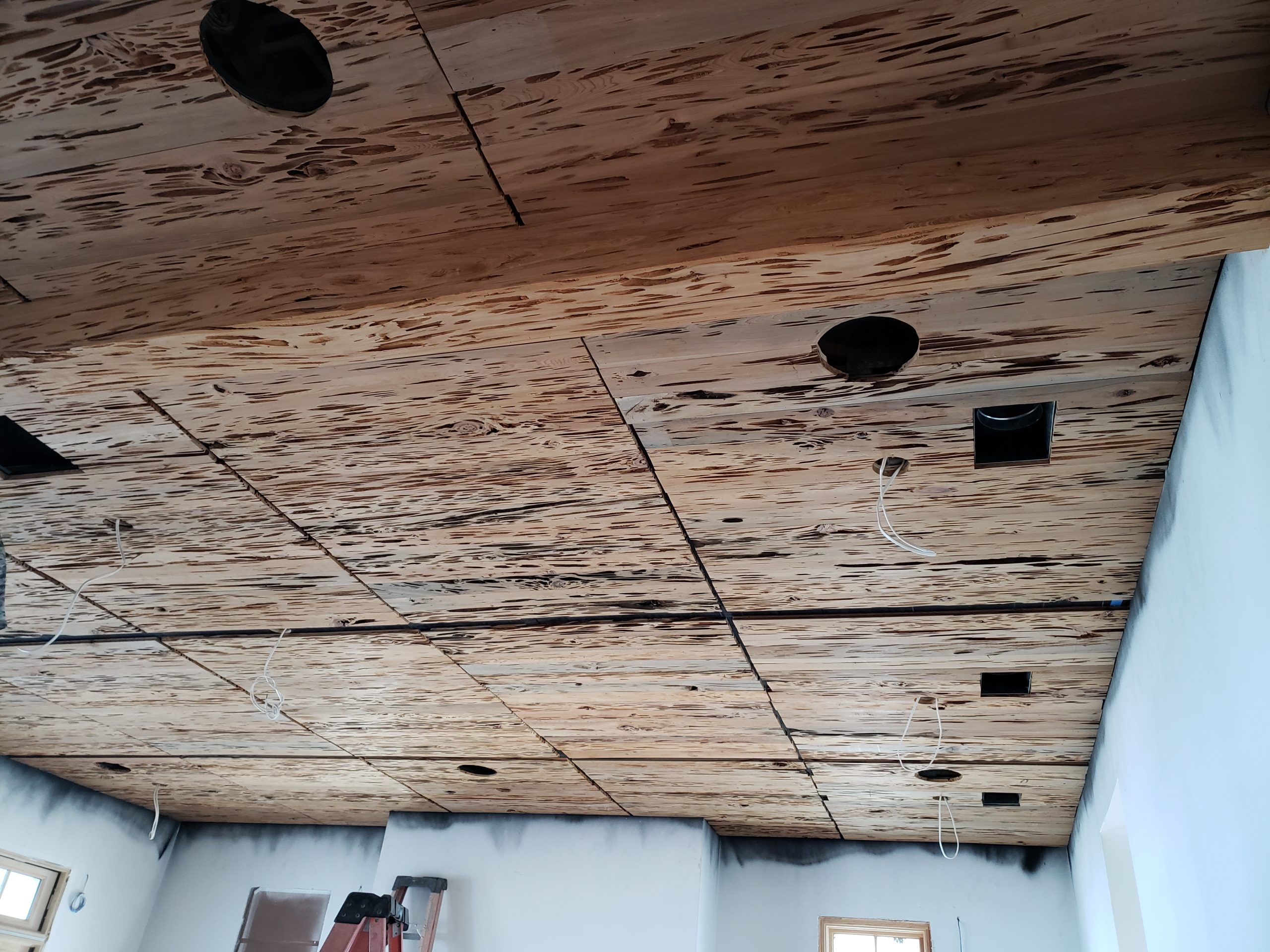
A professional finish on a tongue-and-groove ceiling is not one magic trick at the end. It is the result of a clean sequence: prep, layout, cut quality, fastening control, and finish discipline. Miss any one of those, and the ceiling starts looking homemade in the wrong way.
The earlier version leaned on generic ‘expert tips’ language. This rewrite keeps the advice tied to what actually changes the finished look when you step back and stare at the ceiling in real light.
If the room already feels like it is drifting before the finish work starts, go read Common Mistakes in Tongue-and-Groove Ceiling Installation and correct the install mistakes first.
1. Start with the room looking like it deserves finish work
A professional finish starts before the first board goes up. The framing needs to be worth fastening to. Obstructions need to be planned. The room needs to be dry enough that you are not trapping movement problems into the field. If the prep is loose, the finish cannot save you.
Herb’s Rule of Thumb: Finish problems almost never start at the filler knife. They start when somebody tells themselves the substrate is close enough. If the ceiling plane, the layout, or the room conditions are off, the ‘finish’ becomes a cover-up job instead of a finish job.
2. Make the starter row look intentional
The first row matters because it controls the sight lines. If the starter row is slightly off, the room keeps repeating that mistake all the way across the ceiling. A professional finish always looks deliberate. Deliberate work starts with a line you trust and a row you are not already compensating for by board number three.
That is why I still care about layout tools even in a ‘finish’ conversation. Finish is not decoration. It is the visible result of earlier discipline.
3. Cut quality shows up everywhere
A saw that leaves clean, repeatable cuts makes the whole room calmer. End joints close better. Trim meets cleaner. The final edge work looks like it was planned instead of negotiated. A professional-looking ceiling is full of little places where bad cuts could have shown and didn’t.
This is where a solid miter saw earns its keep. You are buying consistency in the places the eye notices first.
4. Don’t beat the boards into place
You can tell when an installer got impatient. Bruised tongues, shiny face marks, crushed edges, and random force all read loud once the room is finished. Tongue-and-groove boards want persuasion, not punishment. Clean fit-up and controlled fastening do more for a professional look than heroics ever will.
A 5-in-1 tool and a nail set are both ‘small’ tools that matter because they let you correct little problems without creating bigger visible ones.
5. Sand, fill, and caulk like you actually plan to look at it later
Not every ceiling needs the same amount of fill work, and not every gap deserves caulk. Paint-grade jobs and stain-grade jobs are different animals. But whatever route you are on, the work needs to be consistent. Random fill spots and uneven sanding look cheap fast.
If you are deciding what species will make the finish work easier to live with, How to Choose the Right Wood for Tongue-and-Groove Ceilings is the next read worth taking.
A decent random orbital sander keeps you from overworking one spot while ignoring the next. A controlled caulk gun keeps bead size and cleanup from getting sloppy around trim lines and transitions.
6. Watch the room from more than one angle
One of the best pro habits is walking the room from the doorway, under the lights, and from the far wall before you call it done. That is when reveal drift, bad seams, odd grain breaks, and rushed trim transitions start talking. A ceiling can look fine from the scaffold and wrong from the room.
7. The pro finish checklist
- clean substrate and planned penetrations before install
- starter row checked from real sight lines
- repeatable, clean end cuts
- no crushed tongues or rushed face damage
- consistent fill or no fill, depending on finish strategy
- final walk-through from the room, not only from the platform
What makes the finish read professional
A professional finish does not scream for attention. It feels calm. The seams are where they belong, the cuts look controlled, the trim closes up clean, and nothing about the room makes you wonder what went wrong. That is a sequence problem long before it is a polish problem.
If you want a tongue-and-groove ceiling to look pro, act like the finish begins at prep and ends at the final walk-through. That is the real trick.
Pre-finish versus finish-in-place
Some ceilings look cleaner when parts of the finish process happen before installation. Other rooms are easier to touch up after the field is closed. The important thing is choosing on purpose. A mixed strategy can work, but a random strategy usually reads random in the final room.
Think about how the joints, the tongues, and the trim transitions will behave before you decide where the finish labor belongs.
Light exposes more than the scaffold does
One reason pro-looking ceilings still disappoint people is that they only looked at the work from the platform. A ceiling lives in room light. Side light, evening light, and fixture light all change what the eye catches. A slightly rough patch, a lazy seam, or a filler spot you thought was minor gets louder when the room is lit for normal use.
Know when to stop touching it
A professional finish is not the same thing as overworking the ceiling. If a detail is already clean, leave it alone. Too much sanding, too much filler, or too much touching can make a good section look fussed with. Part of finishing well is knowing when the work is already where it needs to be.
Trim transitions deserve the same discipline as the field
A ceiling can look great in the field and still lose the room at the trim transition. Corners, edge trim, and fixture surrounds need the same calm decision-making as the boards themselves. Rushed trim is one of the fastest ways to make decent ceiling work feel unfinished.
Paint-grade and stain-grade ceilings need different finish discipline
A paint-grade ceiling gives you more freedom to unify the look, but it also exposes sloppy filler and lazy sanding once the paint lays down. A stain-grade ceiling asks for cleaner boards and more restraint because the wood character is carrying the final look. You cannot treat both ceilings the same and expect a professional result.
Part of professional finish work is understanding which details need to disappear and which details need to stay honest.
Related reads
- Maintenance Tips for Tongue-and-Groove Ceiling Tools
- Best Tools for Hassle-Free Tongue-and-Groove Ceiling Installation
- Essential Tools for Trim Carpentry and Tongue-and-Groove Installation
That’s it for today, folks. Hope this helps you with your projects. Enjoy the day. I’ll see you on the next one.